A venue sells something unusual: dates. A hotel room that sits empty tonight can be sold tomorrow, but your Saturday, October 17 exists exactly once. If nobody books it, that revenue is not deferred. It is gone.
That is the real job of venue marketing. Not likes, not brand awareness, not a prettier Instagram grid. A steady flow of qualified inquiries, arriving far enough ahead of each date that your calendar fills before the dates expire.
This guide covers how event venues build that flow: direct inquiries instead of directory dependence, showing up for local searches, a website that presents the space honestly, campaigns in the languages your market speaks, tracking that tells you what is working, and planning around your slow seasons.
Directories rent you leads. Direct inquiries are yours.
Most venues start with directories: The Knot, WeddingWire, Peerspace, Eventective, and their regional cousins. It is easy to see why. The audience is already there, comparing venues, and a listing takes an afternoon to set up.
But look at the economics. Directory platforms like WeddingPro, which runs vendor advertising for The Knot and WeddingWire, sell paid plans for visibility and lead features. You pay for placement or per lead, you appear in a list next to every competitor in your area, and the couple’s relationship starts with the platform, not with you. When the platform raises prices, a venue that depends on it has no good options.
The alternative is a direct channel: your own search campaigns, your own social ads, your own website, with inquiries landing in your inbox tagged with where they came from. We run this model for Grand Salon Reception Hall, a Miami wedding and events venue, and the direct campaigns bring in inquiries at a fraction of typical venue-directory pricing. Just as important, every one of those leads belongs to the venue.
Directories still have a place. Some couples only shop there, and the listing doubles as social validation. The point is proportion: directories should supplement a direct channel you control, not stand in for one.
Be there for “venue near me”
Venue searches are local by nature. Nobody books a banquet hall three states away. The searches that matter to you look like “wedding venue near me,” “quinceañera venue in Miami,” or “event space for 150 guests,” typed on a phone by someone who intends to visit in person.
Google decides which venues appear for those searches using three factors it names openly: relevance, distance, and prominence, per Google’s own local ranking guidance. You cannot move your building, but you can influence the other two.
Relevance comes from completeness. Your Google Business Profile should carry accurate categories, hours, service descriptions, and current photos, and your website should have a page for each event type you host. A venue that hosts weddings, quinceañeras, and corporate events needs three pages that say so in plain terms, because “banquet hall” alone matches none of those searches well.
Prominence comes mostly from reviews. Ask every happy client for one while the event is still fresh, and reply to the reviews you get, including the rough ones. A profile with recent, answered reviews outranks a silent one, and it reassures the person reading it that a real business is on the other end.
This is the core of what we build for hospitality and events clients: the local search foundation first, because it feeds every other channel.
A website that shows the space honestly
A venue website has one conversion that matters, the inquiry, and its main job is to answer the questions a prospect has before they are willing to send one.
Three things carry most of the weight:
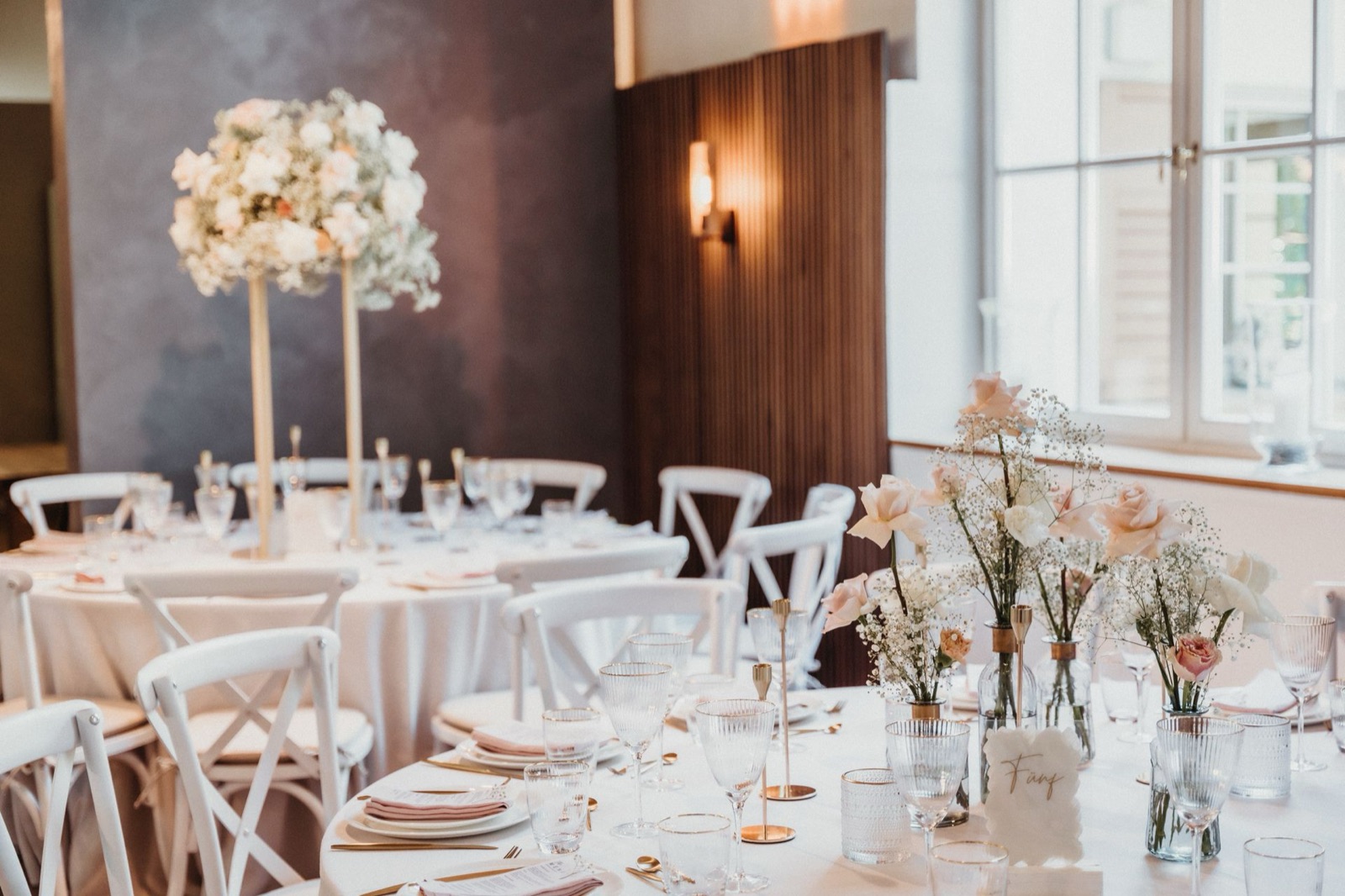
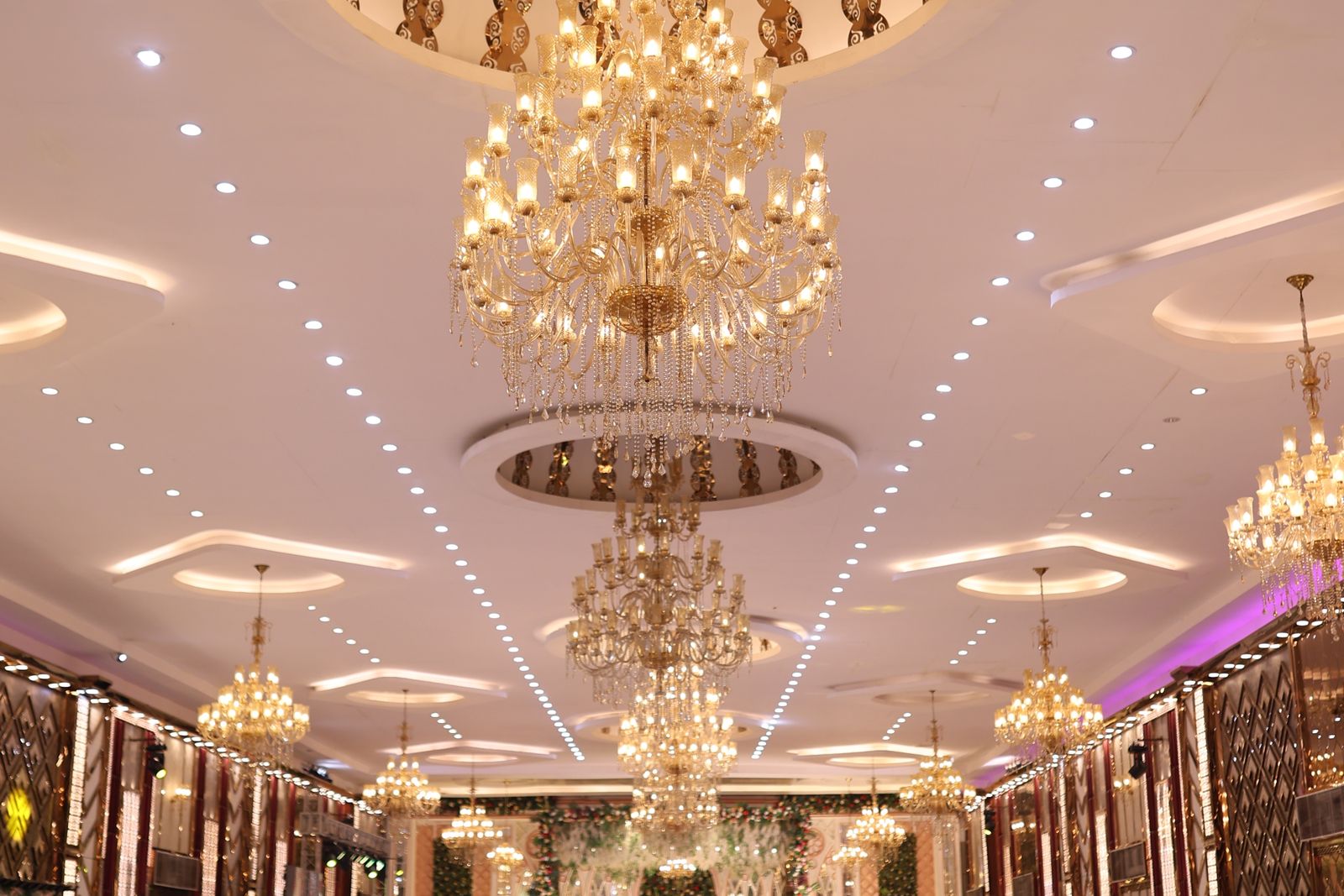
Real photos of real events. Not renderings, not stock, not the room empty under fluorescent light. People are trying to picture their event in your space, so show them the ballroom set for 200, the gazebo mid-ceremony, the cocktail hour on the terrace. Recent photos also quietly answer the question every prospect has about an older venue: what does it look like now?
Capacity, stated plainly. “Up to 300 guests” is a start, but capacity changes with layout. Seated dinner, seated with a dance floor, theater rows, cocktail reception: list the numbers for each. A planner with 180 guests will filter you out in seconds if she cannot find them, and she will not inquire to ask.
Pricing clarity. You do not have to publish a rate card, but you have to give serious prospects a way to tell if you fit their budget. Starting prices, package outlines, or a “what’s included” list all do the job. Total silence on price does not make your venue feel exclusive; it fills your inbox with people whose only question is the one you refused to answer.
Beyond those three, keep the inquiry form short and respond fast. Speed matters more than polish; families touring venues this weekend book with whoever answered.
If you want a tactic-by-tactic checklist for the conversion side, from landing pages to trust signals to CRM setup, our companion piece on 12 tips to increase leads for wedding venues goes deeper on each one.
Market in the languages your market speaks
If your city plans celebrations in more than one language, your marketing has a choice: reach the whole market or half of it.
In Miami, that choice is not subtle. Quinceañeras are a signature event for many venues here, and the parents planning them often search, read, and inquire in Spanish. A venue running English-only campaigns is invisible to a large share of its own best customers.
Bilingual done right means separate campaigns, not translated ones. Search behavior differs by language, so the keywords differ, the ad copy differs, and the landing page should match the language of the ad that brought the visitor. For Grand Salon, we run English and Spanish campaigns side by side as one system, and the Spanish side is not an add-on. It reaches families the English campaigns never would.
The same logic applies anywhere with a substantial second-language market. The question is not whether translation is polite. It is whether you want to compete for the whole city or part of it.
Track every inquiry, with its source and event type
Here is a test: how many inquiries did your venue get last month, which channels did they come from, and which event types were they? If you cannot answer from a record you own, your marketing budget is running on impressions of how busy the phone felt.
The fix is unglamorous and powerful. Log every inquiry, from every channel, in one place the venue controls, with a handful of fields: date received, source, event type, requested date, guest count. A shared sheet works. A CRM works better as volume grows. What does not work is leaving the data scattered across an ads dashboard, a directory inbox, and someone’s memory.
With Grand Salon, every lead the campaigns produce gets logged this way, and over the years that record has grown to 1,000s of tracked inquiries, each with its source and event type attached. That is what lets a venue answer real questions: which channel books weddings versus birthdays, what a booked event costs to acquire from each source, which months each event type inquires in. Budget moves stop being guesses.
The ownership part matters as much as the logging. A record inside a directory’s dashboard disappears if you stop paying. A record the venue owns compounds in value every year.
Plan the year, not the month
Every venue has a shape to its year, and marketing that ignores it wastes money in both directions: overspending when demand is high anyway, going quiet when the pipeline needs filling.
Two seasonal patterns drive most venue planning. First, inquiries and events peak at different times, because weddings and quinceañeras are often booked many months to more than a year ahead. The campaigns you run in engagement season fill dates deep into next year. Second, different event types can fill each other’s gaps: corporate events and holiday parties land in months when weddings thin out, and showers and birthdays book on shorter timelines that can rescue a soft near-term month.
Practically, that means shifting budget toward each event type in its inquiry season rather than spending evenly, promoting shorter-lead event types when a slow month is approaching, and watching your own inquiry log, which will show you your venue’s true seasonality within a year or two of tracking.
Where to start
If your calendar has more open Saturdays than you would like, start with the pieces that compound: claim and complete your Google Business Profile, put real photos and real capacity numbers on your site, give prices a floor people can see, and open a log for every inquiry that arrives. Then build the direct channel, in every language your market plans in, and let the log tell you where the next dollar goes.
And if you would rather have a team that has already done this for venues, get in touch. We are happy to look at your calendar and your numbers and tell you what we would do first.
Related reading: four ways to earn more visitors.